 MatsClocks
PowerPoint Presentation Clocks
⏰ Ireland Time Now
Live Dublin Ireland Time Now PowerPoint Presentation Clock
Free Download MatsClocks-3049
Ireland Time Now PowerPoint Clock
Next Clock >>
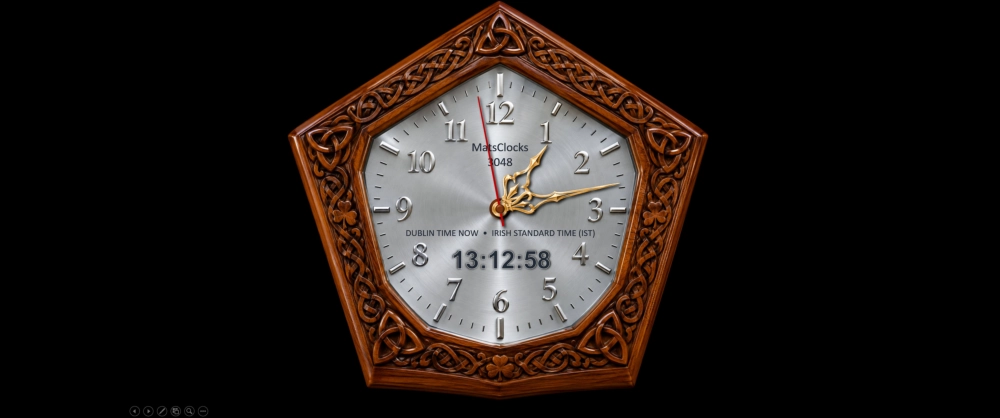
MatsClocks 3049 Dublin Ireland Time Now Clock displays live Ireland Time Now on your PowerPoint Presentation Slide in both analog clock and a digital clock next to it, irrespective of which country in the world you run this PowerPoint Slide. MatsClocks 3049 caters for Daylight Saving Time automatically. The clock starts running the moment you go to presentation mode. All MatsClocks are in Zip files which can be opened using WinZip or any common file compression program. Get the latest Microsoft_Office Software to run PowerPoint on your devices.
Ireland Time Now: Current Time in Ireland, Dublin Time, History and More
Have you ever wondered what time it is in Ireland right now? Whether you are planning a holiday to the Emerald Isle, arranging an international business meeting, keeping in touch with friends and family, or preparing for a new career in Europe, knowing the Ireland Time Now can make your day much easier.
Ireland is a beautiful country known for its green countryside, historic castles, welcoming people, lively cities, and rich cultural heritage. Its capital, Dublin, is a popular destination for tourists, students, business professionals, and people looking for international career opportunities.
However, Ireland's time is not the same throughout the year. The country follows seasonal clock changes, moving between Greenwich Mean Time and Irish Standard Time. Understanding these changes helps you plan your activities, avoid missed appointments, and stay connected with people living in Ireland.
In this guide, we will explore Ireland's current time zone, explain how its clocks change, discover the history of Irish timekeeping, and look at what makes Ireland such an interesting place to visit, live, and work.
Ireland Time Now: What Time Zone Does Ireland Follow?
Ireland follows a time system that changes according to the season. During the winter months, the country observes Greenwich Mean Time (GMT), which is UTC+0. During the summer months, it observes Irish Standard Time (IST), which is UTC+1.
This means that Ireland moves its clocks forward by one hour in spring and back by one hour in autumn.
For anyone checking Ireland Time Now, understanding this seasonal difference is particularly important when communicating with people in other countries.
For example, if you live in India, Ireland is generally four hours and thirty minutes behind Indian Standard Time during the Irish summer. During the Irish winter, the difference increases to five hours and thirty minutes.
These differences can affect international business meetings, online classes, interviews, virtual conferences, and personal conversations.
The simplest way to avoid confusion is to check a reliable live clock whenever you need the precise local time in Ireland.
Dublin Ireland Time Now: What Is the Current Time in Dublin?
Dublin is the capital and largest city of Ireland. It is the country's principal centre for business, education, government, technology, tourism, and cultural activities.
The time in Dublin follows exactly the same seasonal time system as the rest of Ireland.
Therefore, when you check Dublin Ireland Time Now, you are checking the same local time used in cities such as Cork, Galway, Limerick, Waterford, and Kilkenny.
Dublin does not have a separate time zone. Whether you are contacting a company in central Dublin, attending an online meeting with a university, or arranging a sightseeing trip around the city, the same Irish local time applies.
This consistency makes planning across Ireland straightforward. Free Download MatsClocks 3049 Watch Ireland Time Now accurately catered for Daylight Saving Time automatically.
However, if you are communicating with people in London, New York, Dubai, Singapore, or New Delhi, remember that the time difference can change during the year because countries do not all adjust their clocks on the same dates.
A live Ireland clock is particularly useful when arranging meetings with international clients or scheduling interviews with Irish employers.
Ireland Time Zone: GMT and Irish Standard Time Explained
Ireland's time zone is closely connected to Greenwich Mean Time.
GMT represents the time standard associated with the prime meridian, which passes through Greenwich in London. Ireland uses GMT during winter, when clocks return to their standard-time setting.
During summer, Ireland advances its clocks by one hour. This period is known as Irish Standard Time, abbreviated as IST.
Here is a simple overview:
Winter time:
- Time zone: Greenwich Mean Time (GMT)
- UTC offset: UTC+0
- Clocks are set to the standard winter time.
Summer time:
- Time zone: Irish Standard Time (IST)
- UTC offset: UTC+1
- Clocks are advanced by one hour.
This seasonal system allows people to enjoy more daylight during the evening in the summer months.
It is worth remembering that IST can also mean India Standard Time in other contexts. When discussing Ireland, however, IST refers to Irish Standard Time.
The internationally used time zone identifier for Ireland is Europe/Dublin. This identifier is useful for computer systems, digital calendars, scheduling applications, and software that automatically adjusts clocks for daylight saving time.
When Do Ireland Time Now Clocks Change?
Ireland observes daylight saving time, meaning that clocks change twice each year.
In spring, clocks move forward by one hour. In autumn, they move backward by one hour.
The changes follow a predictable annual pattern. Free Download MatsClocks 3049 This PowerPoint Presentation clock shows you Ireland Time Now catering for even the Daylight Saving Time automatically. Accurate always.
Spring: Ireland Time Now Clocks Move Forward
Ireland's summer time begins on the last Sunday in March.
At 1:00 a.m. GMT, clocks move forward to 2:00 a.m. Irish Standard Time.
As a result, people lose one hour on the clock that night, but evenings become lighter for the coming months.
For example, if you are arranging an online meeting with someone in Dublin during March, make sure you know whether Ireland has already moved to summer time.
Autumn: Ireland Time Now Clocks Move Backward
Ireland returns to winter time on the last Sunday in October.
At 2:00 a.m. Irish Standard Time, clocks move backward to 1:00 a.m. GMT.
People effectively gain an extra hour that night, and the country returns to its winter time schedule.
In 2026, Ireland's clocks move forward on March 29 and return to winter time on October 25. These changes are important for anyone who needs accurate information about Ireland Time Now throughout the year.
The seasonal clock changes are also relevant to international travellers, airlines, remote workers, and businesses with customers in different time zones.
Why Is Knowing Ireland Time Now Important?
Knowing the correct time in Ireland can be useful in more ways than you might expect.
In an increasingly connected world, people regularly communicate across borders. A simple misunderstanding about time can lead to missed appointments, delayed work, and unnecessary frustration.
Here are some situations in which checking Ireland Time Now can make a real difference.
1. International Business Meetings
Ireland is home to many international companies, particularly in technology, finance, pharmaceuticals, and professional services.
If your business operates from India, the United States, or another country, you may need to communicate with Irish colleagues or customers.
Checking the local time before sending a meeting invitation helps everyone arrive at the correct time.
Free Download MatsClocks 3049 Know Dublin Ireland Time Now accurately catering for Daylight Saving Time.
2. Remote Work and Online Interviews
Remote work has made it easier for professionals to apply for jobs and work with employers in different countries.
If you have an online interview with a company based in Dublin, knowing the correct Irish time is essential.
Remember that an interview scheduled for 10:00 a.m. in Dublin will correspond to different times in other countries depending on the season.
3. Education and Online Learning
Irish universities and educational institutions attract students from many parts of the world.
Students attending virtual lectures, webinars, online examinations, and academic discussions need to understand the time difference between Ireland and their home countries.
A reliable clock can help students manage their schedules without confusion.
4. Travel Planning
If you are flying to Ireland, checking the local time helps you organize airport transfers, hotel check-ins, sightseeing activities, and appointments.
It is also useful when coordinating with family members who are waiting for your arrival.
5. Staying Connected With Friends and Family
People living abroad often want to speak with their loved ones at convenient times.
Checking Dublin Ireland Time Now before making a phone call can help you avoid calling too early in the morning or too late at night.
A small habit like checking the time can make international communication much more comfortable.
A Brief History of Timekeeping in Ireland
The history of timekeeping in Ireland reflects the development of transportation, communications, and modern society.
Before standard time became widely established, local communities relied heavily on the position of the sun to determine the time of day. Local solar time could vary from one town to another because sunrise, noon, and sunset occur at slightly different times depending on longitude.
This arrangement became increasingly inconvenient as railway networks developed during the nineteenth century. Railway companies needed a consistent timetable so that trains could operate safely and passengers could plan journeys accurately.
Standard time helped solve this problem.
Ireland historically used Dublin Mean Time, which was approximately 25 minutes and 21 seconds behind Greenwich Mean Time. This difference reflected Dublin's geographical position west of Greenwich.
In 1916, during a period of major changes in European timekeeping, Ireland moved to Greenwich Mean Time. The change brought Ireland's clocks into alignment with the standard used in Britain.
Ireland subsequently developed its present seasonal system, observing GMT during winter and advancing clocks during summer.
Today, computers, smartphones, internet services, transport systems, and digital clocks can automatically account for these changes.
The history of Irish timekeeping demonstrates how something as familiar as a clock can reflect wider developments in technology, transport, and international communication.
Ireland Time Now in the Present Day
Modern Ireland combines a strong sense of cultural identity with a globally connected economy.
Dublin is an important European center for technology, financial services, business operations, education, and international commerce. Other cities, including Cork, Galway, and Limerick, also contribute to the country's economic and cultural life.
Ireland is known for its English-speaking environment, universities, music, literature, traditional festivals, and welcoming communities. The Irish language, known as Gaeilge, remains an important part of the country's cultural heritage, particularly in Irish-speaking regions.
Although Ireland is a relatively small country geographically, it has a significant international presence in technology, pharmaceuticals, medical devices, financial services, and other industries.
The country also attracts visitors who want to experience its dramatic coastlines, green landscapes, historic towns, traditional music, and distinctive food culture.
For people considering a move to Ireland, it is important to look beyond its attractions. Housing costs, transport, healthcare arrangements, and the cost of everyday living can vary considerably by location.
Nevertheless, Ireland continues to attract international visitors, students, entrepreneurs, and skilled professionals looking for new experiences and opportunities.
When You Travel What to See in Ireland: Beautiful Places Worth Visiting
Ireland offers a remarkable variety of attractions, from lively cities and historic landmarks to rugged coastlines and peaceful countryside.
Advertisement
✈️ BIG TRAVEL DREAMS. INCREDIBLE DEALS. BOOK NOW! 🌍
Your next unforgettable adventure starts at Trip.com! Grab amazing discounts on flights, hotels, train tickets, car rentals, and must-see attractions worldwide. Whether it’s a dream vacation or a spontaneous getaway, save more and experience more with every booking.
🔥 Don’t wait—your next adventure is calling! Visit Trip.com now, grab the best deals, and BOOK YOUR TRIP TODAY!
If you are planning a visit, consider including some of these destinations in your itinerary.
Dublin: A Capital Full of Character
Dublin offers a mixture of history, literature, architecture, shopping, and nightlife.
Visitors can explore Trinity College, admire its historic surroundings, walk along the River Liffey, and discover the city's museums and galleries.
The city is also known for its traditional pubs, live music, theatres, and friendly social atmosphere.
The Cliffs of Moher: Ireland's Dramatic Coastline
The Cliffs of Moher, on Ireland's western coast, are among the country's best-known natural attractions.
Towering above the Atlantic Ocean, these cliffs offer spectacular views of the coastline and the surrounding landscape.
They are particularly appealing to travellers who enjoy photography, nature, scenic walks, and the beauty of the open sea.
The Ring of Kerry: A Scenic Journey
The Ring of Kerry is a celebrated touring route in the southwest of Ireland.
The journey passes mountains, lakes, coastal villages, beaches, and green countryside.
It is an excellent choice for travellers who want to experience Ireland's landscapes at a relaxed pace.
Galway: Music, Culture, and Colourful Streets
Galway is famous for its lively atmosphere, traditional music, arts, festivals, and colourful streets.
Visitors can explore the city's historic centre, enjoy local restaurants, and experience the cultural character of Ireland's western region.
Galway also provides a convenient starting point for exploring nearby coastal and island destinations.
Blarney Castle: History and Legend
Located near Cork, Blarney Castle attracts visitors interested in Irish history, gardens, and folklore.
The castle is particularly famous for the Blarney Stone, which is associated with the traditional legend of receiving the gift of eloquence.
The surrounding grounds and gardens are also worth exploring.
Killarney National Park: Nature at Its Best
Killarney National Park offers lakes, woodland, mountains, and scenic walking routes.
It is an excellent destination for people who enjoy outdoor activities and want to experience Ireland's natural beauty.
Whether you prefer a gentle stroll or a longer excursion, the park provides opportunities to appreciate the countryside.
Ireland has much more to offer beyond these destinations. Historic castles, traditional villages, coastal roads, ancient monuments, and local food experiences can all make a visit memorable.
For official travel inspiration and destination information, explore the Ireland tourism website.
Job Opportunities in Ireland
Ireland is an attractive destination for professionals seeking international work experience. Its economy includes multinational companies, established domestic businesses, research institutions, healthcare organizations, and growing technology enterprises.
However, employment opportunities depend on a person's qualifications, professional experience, language skills, location, and eligibility to work in the country.
Several sectors are worth exploring when researching jobs in Ireland.
Information Technology and Software Development
Ireland has an established technology sector, particularly in Dublin.
Potential opportunities include software development, cybersecurity, cloud computing, data analytics, artificial intelligence, IT project management, and technical support.
Professionals with relevant qualifications and practical experience may find opportunities with multinational companies as well as smaller technology businesses.
Healthcare and Medical Services
Healthcare is another important employment area.
Depending on qualifications and registration requirements, opportunities may be available for doctors, nurses, medical scientists, healthcare technicians, and other healthcare professionals.
International applicants should check the professional recognition and registration requirements that apply to their particular occupation.
Engineering and Manufacturing
Ireland has significant activity in pharmaceutical manufacturing, medical devices, electronics, construction, and engineering.
Potential roles include mechanical engineers, electrical engineers, quality specialists, process engineers, construction professionals, and manufacturing technicians.
The qualifications required vary by position, and some occupations may require professional accreditation.
Finance, Accounting, and Business Services
Dublin is an important centre for financial services and international business operations.
Possible career paths include accounting, financial analysis, risk management, compliance, insurance, investment services, and business consulting.
Professionals with relevant qualifications, analytical skills, and experience may find opportunities in this sector.
Hospitality and Tourism
Ireland's tourism industry supports employment in hotels, restaurants, visitor attractions, travel services, and other hospitality businesses.
Opportunities can range from entry-level service positions to specialized management and professional roles.
The availability of work may vary by location and season.
How to Find Jobs in Ireland
If you are considering working in Ireland, start by identifying positions that match your experience and qualifications.
Prepare a clear CV, research employers, and apply through reputable recruitment websites or company career pages. Check the job description carefully to understand the required skills, salary arrangements, and employment conditions.
International applicants should also check whether they need an employment permit or another form of authorization to work in Ireland. Eligibility depends on factors such as nationality, occupation, qualifications, and the applicable immigration rules.
For current information about employment permits, visit the Irish Department of Enterprise, Tourism and Employment.
Researching opportunities carefully will help you make informed decisions about building a career in Ireland.
How to Stay Updated With Ireland Time Now
As international communication becomes increasingly important, having quick access to accurate local time can make everyday life easier.
Although smartphones and computers usually display the time automatically, a dedicated clock can be particularly helpful in offices, classrooms, conference rooms, reception areas, and business presentations.
A visible Ireland clock allows people to check the local time without opening another application or interrupting their work.
This can be especially useful for businesses that regularly communicate with Irish clients, international students attending Irish universities, recruiters conducting interviews, and professionals working across time zones.
If you frequently need to check Dublin Ireland Time Now, consider keeping a reliable digital clock or world-clock tool readily accessible.
It is also important to use a clock that automatically accounts for Ireland's seasonal time changes. This avoids the need to remember when the country switches between GMT and Irish Standard Time.
For presentations and meetings, displaying Ireland's local time alongside your own time zone can make international scheduling more convenient.
IIreland Time Now: Frequently Asked Questions
1. What time zone does Ireland use?
Ireland uses Greenwich Mean Time (GMT), UTC+0, during winter and Irish Standard Time (IST), UTC+1, during summer.
2. Is Dublin in the same time zone as the rest of Ireland?
Yes. Dublin follows the same time as the rest of Ireland. There is no time difference between Dublin, Cork, Galway, Limerick, and other locations within the country.
3. Does Ireland Time Now observe daylight saving time?
Yes. Ireland advances its clocks by one hour on the last Sunday in March and moves them back by one hour on the last Sunday in October.
4. What is the time difference between Ireland and India?
Ireland is four hours and thirty minutes behind India Time Now during Irish summer time and five hours and thirty minutes behind India during Irish winter time.
For example, when it is 6:00 p.m. in India, it is 1:30 p.m. in Ireland during summer and 12:30 p.m. during winter.
5. Is Ireland's time the same as the UK's time?
YYes. Ireland and the United Kingdom Time Now currently follow the same seasonal clock-change schedule. Both use GMT during winter and advance their clocks by one hour during summer.
6. What is the time difference between Ireland Time Now and New York Time Now?
The difference depends on the time of year because Ireland and New York observe daylight saving time on different schedules.
Ireland is generally five hours ahead of New York when both are observing their respective daylight saving periods. When both are on standard time, Ireland is generally five hours ahead as well?
MMore precisely, Ireland is five hours ahead of New York Time Now during periods when both observe their respective summer times, and five hours ahead when both observe standard time. During the brief periods when their seasonal clock changes do not align, the difference can be four hours or six hours.
Always verify the difference for your specific date before scheduling a meeting.
7. What is the best way to check Ireland Time Now?
A reliable live world clock is one of the easiest ways to check Ireland's local time. Free Download MatsClocks 3049 Ireland Time Now Clock in a PowerPoint Presentation Slide that automatically adjusts for daylight saving time so that the displayed time remains accurate throughout the year.
Final Thoughts
Ireland is a country where ancient traditions meet modern opportunities. From Dublin's busy streets and international business community to the spectacular Atlantic coastline and peaceful green countryside, it offers something for visitors, students, professionals, and residents alike.
Understanding Ireland Time Now is a simple but valuable part of staying connected with this fascinating country. Whether you are planning a holiday, attending an online interview, managing an international business, or speaking with someone in Dublin, knowing the correct local time helps everything run more smoothly.
Remember that Ireland follows GMT during winter and Irish Standard Time during summer. Since the clocks change twice a year, checking a reliable live clock is the best way to avoid confusion.
The next time you search for Dublin Ireland Time Now, you will know not only how Ireland's time zone works, but also a little more about the country's history, attractions, lifestyle, and career opportunities.
Ireland may be a small country on the map, but its culture, landscapes, and international connections give it a presence that reaches far beyond its shores.
Free Download MatsClocks-3049
Ireland Time Now PowerPoint Clock
Next Clock >>
Get
Microsoft_Office Software to run PowerPoint. And get
WinZip to unzip the .zip file and extract the
MatsClocks PowerPoint Clocks.